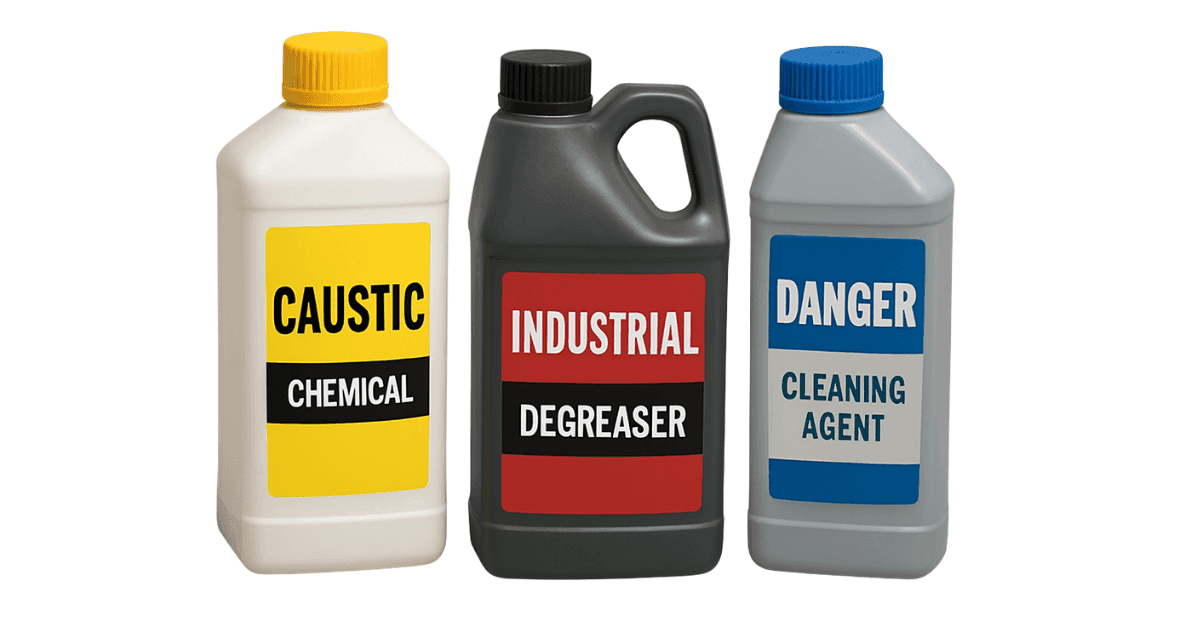
How to Choose the Right Plastic Bottle for Industrial Liquids
Selecting a plastic bottle for industrial liquids is a technical and operational decision, not a visual or marketing one. The right packaging choice directly affects product safety, shelf life, transport reliability, regulatory compliance, and total cost of ownership. A poor choice, on the other hand, can result in leakage, material degradation, customer complaints, and costly supply chain disruptions.
Industrial liquids vary widely in composition, handling requirements, and storage conditions. This article outlines the key factors industrial buyers should evaluate when choosing plastic bottles for liquid products, helping ensure reliable performance across real-world applications.
Understand the Nature of the Industrial Liquid
The first and most important step is understanding the liquid itself. Not all industrial liquids behave the same way, and packaging compatibility depends heavily on formulation.
Key questions to consider include:
Is the liquid acidic, alkaline, solvent-based, or water-based?
What is the concentration level?
Does it release gas or build internal pressure?
Is it sensitive to light, oxygen, or moisture?
Clear answers to these questions form the foundation for selecting the correct bottle material and closure system.
Material Selection: Matching Plastic to Application
Different plastic materials offer different performance characteristics, and material choice is critical in industrial packaging.
HDPE (High-Density Polyethylene) is widely used for industrial liquids due to its excellent chemical resistance, impact strength, and stress-crack resistance. It is suitable for chemicals, detergents, automotive fluids, agrochemicals, and many technical liquids.
PET (Polyethylene Terephthalate) is commonly used for water-based or mild formulations where clarity and rigidity are desired. However, it is more sensitive to aggressive chemicals and extreme temperatures.
Other materials, such as PP or fluorinated plastics, may be used for specialized applications but often involve higher costs or limited availability.
Material selection should always be driven by chemical compatibility and operating conditions, not by appearance or unit price alone.
Chemical Resistance and Long-Term Stability
Short-term compatibility does not guarantee long-term performance. Industrial liquids are often stored for extended periods or transported over long distances.
Over time, incompatible materials may experience:
Softening or swelling
Stress cracking
Permeation or leakage
Structural weakening
Testing material resistance under realistic conditions is essential, especially for export-oriented or long shelf-life products. HDPE generally offers a wider safety margin for long-term chemical exposure.
Bottle Strength and Mechanical Performance
Industrial bottles must withstand more than just the liquid they contain. During filling, storage, and transport, they are exposed to mechanical stress.
Key mechanical considerations include:
Drop resistance during handling
Compression strength during pallet stacking
Vibration resistance during transportation
A bottle that performs well chemically but fails mechanically can still cause product loss. Wall thickness, bottle geometry, and material density all influence mechanical strength.
Bottle Shape and Design Considerations
Bottle shape affects not only appearance but also functionality and logistics efficiency.
Round bottles are often preferred for pressure distribution and uniform strength. Rectangular or square bottles can improve pallet efficiency and space utilization. Flat designs may be chosen for ergonomic handling or labeling requirements.
Design elements such as grip areas, level indicators, and reinforced corners can improve usability and safety in industrial environments.
Closure Systems and Sealing Performance
The bottle alone does not ensure safe packaging. Closures and sealing systems are equally important.
Industrial liquids may require:
Tamper-evident caps for safety and compliance
Induction seals for leak prevention
Chemical-resistant liners such as PE foam
Vented caps for products that release gas
The compatibility of the closure with both the bottle material and the liquid must be evaluated as a complete system. A strong bottle paired with an unsuitable liner can still fail.
Permeability and Barrier Requirements
Some industrial liquids are sensitive to external factors such as oxygen, moisture, or evaporation. Plastic materials differ in their permeability characteristics.
If product stability depends on limiting gas or vapor exchange, barrier performance becomes a key selection factor. In other cases, chemical resistance and mechanical strength may take priority over barrier properties.
Understanding which performance aspect is critical for the specific liquid helps avoid unnecessary cost or overengineering.
Temperature and Environmental Conditions
Industrial liquids may be stored or transported across a wide range of temperatures. Plastic materials respond differently to heat and cold.
Buyers should consider:
Performance in cold storage or winter transport
Resistance to deformation at elevated temperatures
Exposure to outdoor conditions or UV light
HDPE generally maintains flexibility and impact resistance across a broader temperature range, making it suitable for variable environments.
Regulatory, Safety, and Transport Requirements
Depending on the type of liquid and destination market, packaging may need to meet specific safety or transport expectations.
Even when formal certification is not required, packaging should support:
Secure sealing
Clear labeling
Safe handling during logistics
Packaging that aligns with regulatory and transport norms reduces the risk of delays, rejections, or compliance issues.
Cost Considerations and Total Ownership Value
Focusing solely on unit price can be misleading in industrial packaging decisions.
A lower-cost bottle that fails in transport or storage can generate costs far exceeding initial savings. Product loss, cleanup, returns, and reputational damage all contribute to total cost.
Evaluating packaging based on durability, compatibility, and reliability often results in better long-term value.
Working with an Experienced Packaging Supplier
Choosing the right plastic bottle is rarely a one-step decision. Experienced suppliers can provide valuable support by:
Recommending suitable materials
Offering samples for testing
Advising on closure and liner options
Ensuring consistent quality across production batches
Early collaboration helps prevent costly issues after scaling production or entering export markets.
Conclusion
Choosing the right plastic bottle for industrial liquids requires a balanced evaluation of material compatibility, mechanical strength, sealing performance, environmental conditions, and long-term reliability.
There is no universal solution that fits every application. However, by focusing on real operating conditions rather than appearance or price alone, industrial buyers can select packaging that supports safety, efficiency, and scalable supply.
A well-chosen plastic bottle is not just a container—it is a critical component of a reliable industrial liquid packaging system.
Need Packaging Solutions?
Explore our wide range of high-quality plastic bottles, jars, and caps perfect for your products.