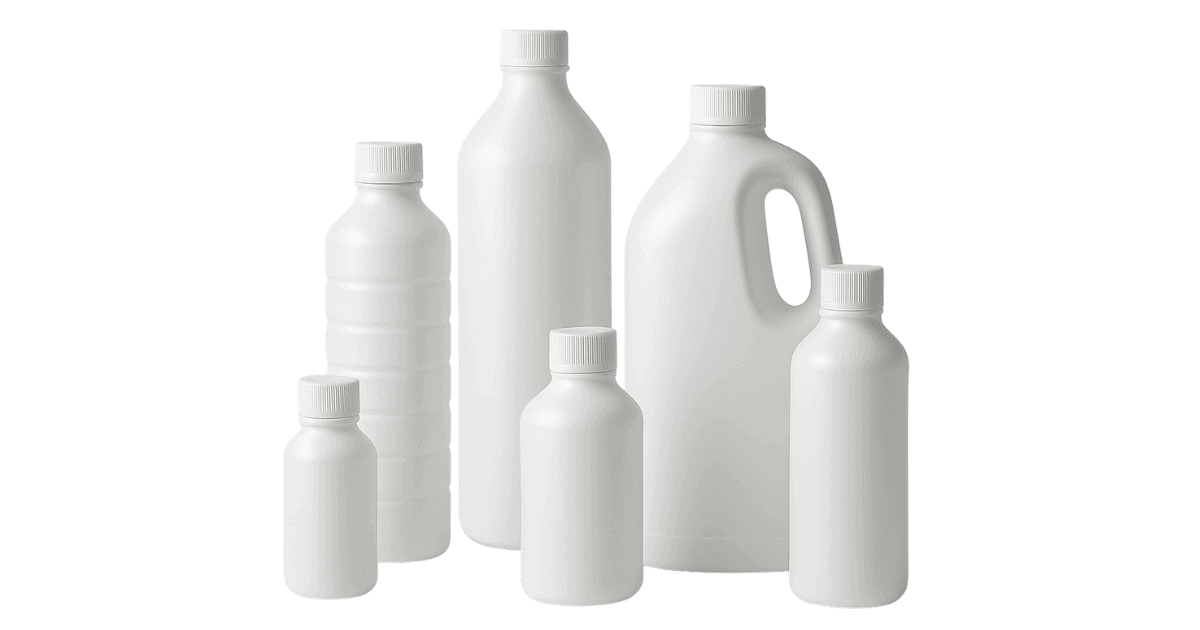
Chemical Resistant Plastic Bottles: Key Selection Criteria for Industrial Applications
In industrial packaging, chemical resistance is not a secondary feature—it is a fundamental requirement. Choosing the wrong plastic bottle can lead to material degradation, leakage, product contamination, safety risks, and regulatory non-compliance. For manufacturers, distributors, and exporters, packaging failures often result in higher costs than the product itself.
Chemical resistant plastic bottles are designed to withstand aggressive formulations, demanding storage conditions, and complex logistics environments. However, not all plastic materials perform the same way. This article outlines the key selection criteria industrial buyers should evaluate when choosing plastic bottles for chemical applications.
Understanding Chemical Resistance in Plastic Packaging
Chemical resistance refers to a material’s ability to maintain its structural integrity and performance when exposed to specific substances over time. This includes resistance to corrosion, swelling, stress cracking, permeability, and chemical interaction.
In industrial environments, chemical exposure is rarely limited to short-term contact. Bottles may store products for months, experience temperature fluctuations, or be transported across long distances. As a result, chemical resistance must be evaluated based on real operating conditions, not just basic compatibility charts.
Material Selection: The Foundation of Chemical Resistance
The choice of plastic material is the most critical factor in chemical packaging performance.
High-Density Polyethylene (HDPE) is widely regarded as one of the most chemically resistant plastics used in industrial bottles. It performs well against acids, alkalis, alcohols, detergents, and many solvents, making it suitable for a broad range of chemical formulations.
Polyethylene Terephthalate (PET) offers good resistance to water-based and mild chemicals but is more sensitive to strong acids, high-pH solutions, and certain solvents. Other materials such as PP or fluorinated plastics may be used for specialized applications but often involve higher costs or limited availability.
Industrial buyers should evaluate material selection based on:
Chemical composition and concentration
Exposure duration
Storage and transport conditions
Stress Cracking and Long-Term Material Stability
One of the most overlooked risks in chemical packaging is environmental stress cracking. This occurs when a plastic material gradually weakens under continuous chemical exposure combined with mechanical stress.
Stress cracking may not be immediately visible, but it can lead to sudden failure during handling or transport. HDPE generally offers better resistance to stress cracking than many alternative plastics, which is why it is frequently selected for demanding industrial use cases.
For long shelf-life products or export shipments, long-term stability is as important as short-term compatibility.
Mechanical Strength and Handling Conditions
Chemical bottles must withstand more than just chemical exposure. They are routinely subjected to:
Drop impact during handling
Compression during pallet stacking
Vibration during transportation
Chemical resistant bottles should maintain their shape and sealing performance under these conditions. Materials with insufficient impact resistance may crack or deform, increasing the risk of leakage.
Industrial buyers should consider how bottles will be filled, stacked, palletized, and transported before finalizing specifications.
Closure Systems and Liner Compatibility
Chemical resistance does not depend solely on the bottle itself. Closures and liners play an equally important role in overall packaging performance.
Common closure considerations include:
Tamper-evident caps for safety and compliance
Induction seals for leak prevention
Chemical-resistant liners such as PE foam or specialized sealing materials
Vented closures for products that release gas
A chemically resistant bottle paired with an incompatible liner or cap can still fail. Bottle and closure systems must be evaluated as a complete unit.
Permeability and Product Protection
Some chemicals are sensitive to moisture, oxygen, or external contaminants. Plastic materials vary in their permeability to gases and vapors.
While barrier performance is often associated with food or beverage packaging, it can also be relevant in chemical applications where oxidation or evaporation affects product stability. Buyers should assess whether barrier properties are critical for their formulation or whether structural and chemical resistance take priority.
Temperature Resistance and Environmental Conditions
Chemical packaging is often exposed to varying temperatures during storage and transport. Plastic materials respond differently to heat and cold.
Bottles should maintain flexibility and impact resistance at lower temperatures and resist deformation at higher temperatures. For products shipped across regions or stored in non-controlled environments, temperature performance becomes a key selection criterion.
Regulatory and Transport Considerations
Depending on the chemical and destination market, packaging may need to comply with specific transport or safety regulations. While not all chemicals require certified packaging, industrial buyers should consider:
Transport safety expectations
Labeling and sealing requirements
Export and logistics standards
Packaging that meets these expectations reduces risk during audits, inspections, and cross-border shipments.
Cost Evaluation Beyond Unit Price
In chemical packaging, the lowest unit price does not always represent the lowest total cost. Packaging failure can result in:
Product loss
Cleanup and disposal costs
Customer complaints or recalls
Damage to brand reputation
Durable, chemically resistant bottles may carry a slightly higher initial cost but often reduce long-term operational risk and total ownership cost.
Working with the Right Packaging Supplier
Selecting chemical resistant plastic bottles is rarely a one-size-fits-all decision. Experienced suppliers play a critical role by offering:
Material guidance based on application
Sample testing and evaluation
Closure and liner compatibility support
Consistent quality across production batches
Clear communication between buyer and supplier helps ensure that packaging performs as expected in real industrial conditions.
Conclusion
Chemical resistant plastic bottles are a critical component of safe and reliable industrial packaging. Material selection, mechanical strength, closure compatibility, temperature performance, and long-term stability all influence packaging success.
For industrial applications, HDPE bottles are often the preferred solution due to their broad chemical resistance and robust performance. However, every application should be evaluated individually based on formulation, handling conditions, and regulatory requirements.
By focusing on key selection criteria rather than price alone, industrial buyers can reduce risk, improve safety, and ensure long-term packaging performance across their supply chains.
Need Packaging Solutions?
Explore our wide range of high-quality plastic bottles, jars, and caps perfect for your products.